Vision
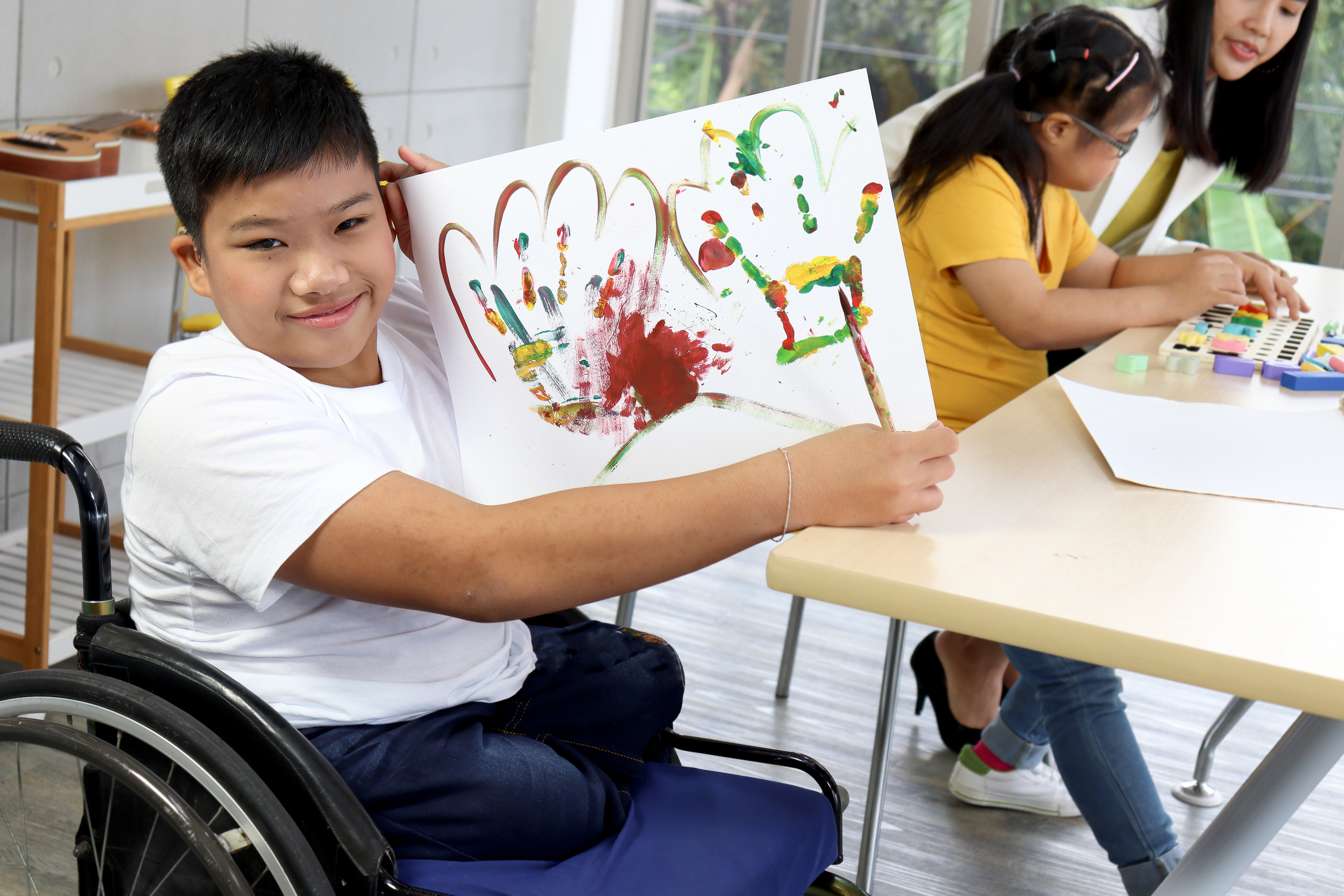
CSIE’s vision is that all children are safe, included and learning in their local school(1). This vision applies to all children, irrespective of their background and personal characteristics, especially ability or perceived ability. We refer to this as good quality inclusive education(2). It gives children: optimum opportunities for learning from their peers and from educators (this applies to the curriculum as well as personal & social development); and a sense of belonging in their local community. It can also offer powerful experiences for educating people away from prejudice and, therefore, can be an important step towards an inclusive society, where minority groups are no longer harassed, marginalised or excluded, and instead are valued and celebrated for what they bring to society as a whole.
This vision is consistent with national law (the SEND Code of Practice confirms the presumption of inclusion in the Children and Families Act)(3) and the international call for all children to be included in their local school, e.g. in the UN Convention on the Rights of the Child and the UN Convention on the Rights of Persons with Disabilities.
In the wake of the Black Lives Matter movement, CSIE supports the call to decolonise the curriculum and suggests that institutional change needs to go deeper. People’s identities
are multi-faceted, as people from all ethnic backgrounds may also be, for example, gay, lesbian, trans or disabled. CSIE addresses equality holistically and remains alert to the possibility that different aspects of a person’s identity can have a cumulative effect on the risk of discrimination.
Most aspects of equality are reasonably well addressed in education, but disability equality is consistently overlooked and there is evidence of institutional prejudice against disabled people, which remains largely unacknowledged. Many disabled children are not welcome in their local school and their segregation is widely considered acceptable(4), as education practice remains out of sync with the national and international legal call to develop more inclusive education.
Who has the power to make this happen?
Core Principles
Beneficiaries
Ultimate beneficiaries:
disabled and non-disabled children, all of whom will benefit from inclusive education. Society as a whole will also benefit, as inclusive education can pave the way for greater social justice.
Direct beneficiaries:
disabled children, who often face discrimination, including institutional discrimination, in education.
Indirect beneficiaries:
non-disabled children, whose educational experience will be enhanced by inclusive education; parents who want an inclusive education for their disabled children, who will no longer have to fight for this.
Additional stakeholders
School leaders, teachers and teaching assistants, who will be better equipped to work in inclusive schools.
What levers for change can we pull, to influence the behaviour of those who have power to make inclusion happen?
The biggest barrier in advancing disability equality in education is that most schools do not see inclusion as a human rights issue and do not see any need to change their cultures, policies or practices. The way teaching & learning are organised in schools and other educational settings continues to be shaped by long-established and little-reviewed practices (such as conventional patterns of 1:1 support from teaching assistants) and outdated perceptions of disability; this gives rise to institutional prejudice and the widespread belief that some disabled children cannot be included in ordinary schools. Other barriers are connected to national policies: for example the narrative of “parental choice” of school, whereby some options are not available in some areas, leaving some parents no option but to agree to a school placement which does not reflect their choice; or the standards agenda and league tables which create competition between schools, effectively providing a disincentive for schools to include disabled children. Finally, another barrier is the process through which school places are allocated; the Children’s Commissioner report referenced above suggests that some schools deny admission to disabled children in unofficial, and potentially unlawful, ways.
Our experience tells us that, following a successful awareness-raising event, people become more willing to change their practice because they understand the significance of inclusion in principle and the benefits of effective inclusion in practice for disabled and non-disabled children, and for society as a whole. CSIE’s work, therefore, focuses on raising awareness about disabled children’s right to a good inclusive education in the community in which they live, and on supporting local authorities, schools and other educational settings to develop more inclusive cultures, policies and practices.
In light of all the above, our activities focus on:
a) raising awareness about disability equality in education and campaigning for the development of more inclusive education; we do this through talks, training, resources, responses to consultations, networking and a strong online presence;
b) supporting schools and other educational settings to build capacity to include disabled children; we do this through direct engagement with schools and other educational settings, as well as through research, talks, training, resources, networking and information exchange;
c) offering consultancy nationally and internationally; we do this through offering advice for national agencies, working with local authorities to support inclusive school development, assisting schools and other educational settings to review and develop their inclusive practice, and contributing to international projects.
Footnotes
- Throughout this document ‘school’ is taken to mean any provider of Early Years, Primary, Secondary, Further or Higher Education and ‘child’ refers to any child or young person up to the age of 18.
- We acknowledge that attending one’s local school is not in itself a marker of inclusion
- We acknowledge that a documented legal call may not be reflected in current national policy or priorities.
- See, for example, https://www.childrenscommissioner.gov.uk/blog/experiences-of-children-with-send/ and https://www.ipsea.org.uk/blog/when-a-school-doesnt-want-your-child.
- Ofsted (2021) SEND: Old issues, new issues, next steps. Available at: https://www.gov.uk/government/publications/send-old-issues-new-issues-next-steps
- Home Office official statistics on Hate Crime, England and Wales, year ending March 2024. Available at: https://www.gov.uk/government/statistics/hate-crime-england-and-wales-year-ending-march-2024
- Alana Institute (2016) A Summary of the Evidence on Inclusive Education. Available at: https://alana.org.br/wp-content/uploads/2016/12/A_Summary_of_the_evidence_on_inclusive_education.pdf
- Sobel, D. (1998). Longitude : the true story of a lone genius who solved the greatest scientific problem of his time. London: Fourth Estate.
- Equality Act 2010, Children and Families Act 2014, UN Convention on the Rights of the Child and UN Convention on the Rights of Persons with Disabilities.
- Office of the Children’s Commissioner (2014). It might be better if you looked elsewhere; an investigation into the schools admission process (available at https://www.childrenscommissioner.gov.uk/report/it-might-be-best-if-you-looked-elsewhere)