May 31, 2026
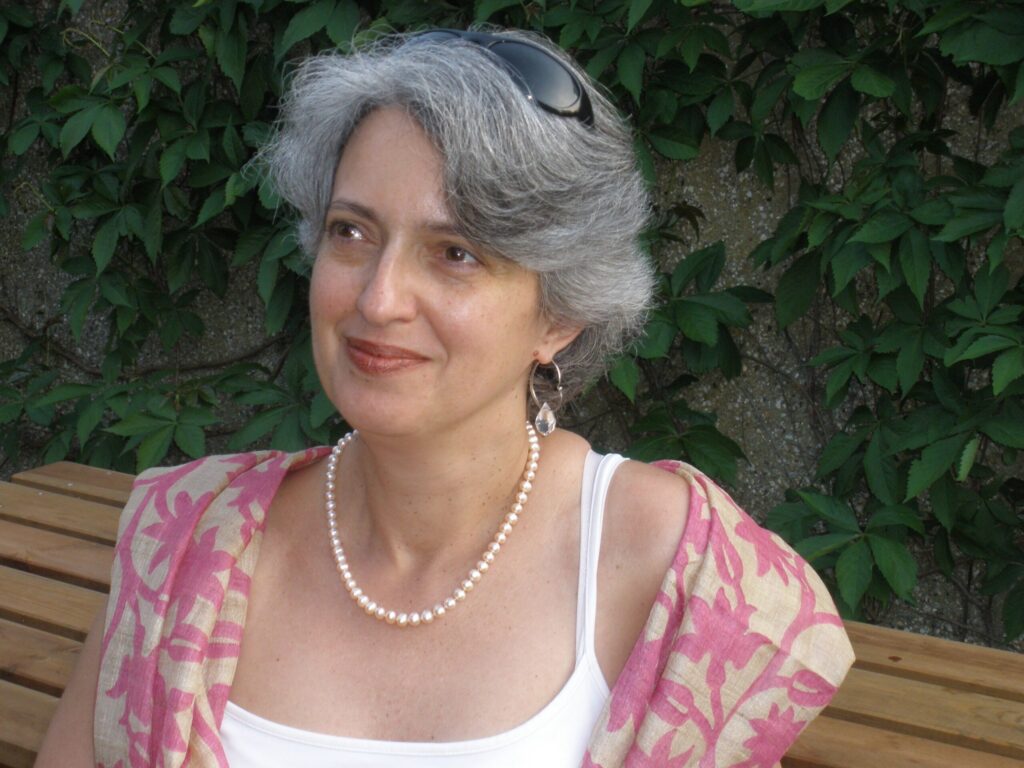
Last summer I was very excited to be reviving this blog, and was looking forward to having time to write regularly. It wasn’t to be and, as the sun sets on this last day of May, so the final curtain falls on CSIE. This is my personal farewell to a beloved organisation.
But first a word about the title. In the introduction to his book Inclusion: the dynamic of school development (OUP 2004) David Skidmore says that in 1964 his brother Dominic was refused admission to school, on the grounds of medical advice that he was “suffering from such a disability of mind as to make him unsuitable for education at school”. Dominic had Down Syndrome and was believed to have severe learning difficulties.
Today many children with similar diagnoses go to their local school, and yet the thought that medical evaluations can determine school placements is still widely seen as acceptable. I long for the day when medical assessments are not needed, or are simply used to help plan appropriate support in ordinary schools.
As a young adult Dominic co-authored a book with his mother, describing the many hobbies and interests which helped to stop him getting bored. I still remember David Skidmore’s clear question: How could someone capable as an adult of co-authoring a book be seen in childhood as unsuitable for education at school? And, I add: How many children like Dominic (or not like Dominic) has our education system failed? Dominic’s book was titled “Time on My Hands”, it came to my mind now as I chose the title for this blog post and I just thought I’d mention it.
I will have Time on my hands from tomorrow, for a very different reason: CSIE closes today, the last day of May, after 44 years of working tirelessly towards more inclusive education for all, especially those with labels of special educational needs and disability.
It has been wonderful to receive many messages of appreciation and support, since CSIE’s closure was announced earlier this month. Here are a few:
“I have been following you on and off since doing an MA in SEN in 2000 and just wanted to send my thanks for all the hard work you have done to advocate inclusivity. Your work has been inspirational for me. Thank you!”
“I’m very sorry to read this news, I hope you can continue your work in other scenarios.”
“Very sad news. I began my journey almost 40 years ago with the help of CSIE. They were then putting together a meeting of parents at Westminster Hall which formed the Forum “81 Action”. It was my ambition to have my 3 daughters educated in their local Primary School of just 38 children. I achieved this with CSIE and 81 Action help. I became a trustee of 81 Action and formed a local group in Norfolk in 1987, which is still going strong today. Mark helped me start the group and brought CSIE information to the launch. I am not sure what the new White Paper will bring, whether it will take us back 40 years to when we had to fight for provision in Mainstream, lets hope the Government will have learnt from that and put more funding into mainstream schools to make inclusion possible.”
“This is dreadful news. I have been linked with CSIE since the mid 90s (…). Since then, the organisation has grown massively in terms of its influence, in the UK and globally. During that period your leadership has been a major factor in this progress.”
“Suffice to say, CSIE has had a huge impact on my personal and professional development, as it has on so many people in the UK and beyond. This may be the end of CSIE’s chapter, but the impact it made in the last 40+ years will remain. Thank you so much for your tremendous hard work and dedication to inclusion – you have greatly inspired me.”
As I reflect back on my nearly 20 years at the helm, it is hard to pick my favourite moments because there are so many. Here is a small selection, in no particular order: receiving an invitation to speak at a conference in Abu Dhabi, nominating my colleague to go, and hearing from the organisers that they want me to go as well; organising a 2-week study trip for a delegation of Indian educators and policy-makers and welcoming them in London covered in snow; hearing that after a Disability Awareness Workshop for pupils in a year 6 class, one pupil turned to their teaching assistant and said Now I’m ready to talk to the class about me; co-creating Equality: Making It Happen with schools in Bristol & London and winning an international award in its year of publication; hearing that a parent who came to one of last year’s workshops in Bristol found the experience so transformative that they made sure their partner attended the same workshop in another location; the short video for my 2.6 challenge, the CSIE film (full poem pasted below, only part used in the film), the collages representing voices of Bristol parents and the films about them, the handshake with Queen Elizabeth II at Windsor Castle and hearing her tell me “thank you for what you do”, and oh so many other beautiful memories…
Alison, Alison, Alvin, Armineh, Barbara, Belinda, Ben, Ben, Birsen, Brahm, Brigid, Caroline, Colin, Daniel, Dave, Ellie, Eman, Emma, Emma, Gerry, Geri, Gerv, Gill, Graham, Hana, Hannah, Ingrid, Ioanna, Iva, Jackie, Jane, Jen, Jill, João, Jo, Jo, Joe, Jon, Jonty, Judith, Julie, Karl, Katrien, Lenka, Les, Lilit, Linda, Lucy, Mailin, Malini, Marianne, Marie, Marie-france, Mark, Mark, Mark, Mark, Matt, Mel, Michael, Micheline, Mithu, Mônica, Monika, Oli, Orlaith, Paty, Peter, Peter, Peter, Philippa, Philippa, Richard, Robin, Roger, Roger, Roland, Ruth, Ruth, Sarah, Sarah, Sarah, Sarah, Sathi, Saville, Seth, Sharon, Sheila, Sue, Sue, Tanisha, Tim, Tom, Wayne, Will and Yioda, it has been great to meet and work with you, the memories and hopefully many relationships will stay alive.
Lonely at the top by Randy Newman, sung by Elli Paspala
Our story of inclusion
Come with me and I’ll tell you a
big story in education.
The early 1980s brought
the start of integration.
A new law said for the first time
that as a general rule
all children have an equal right
to an ordinary school.
The thinking was that schools should change
and from old ways untether.
That for all needs there’d be support,
so all could learn together.
From the mid-1990s came
a change of word quite strong:
Inclusion in a local school
to show where we belong.
Ongoing change for many years
was evident, yet slow.
More children went to mainstream schools,
as placement trends do show.
The word Inclusion grew with time:
from just SEND,
all aspects of diversity
it slowly came to be.
From 2010, or just before,
the tide began to turn.
Without enough support in schools,
some children did not learn.
Instead of strengthening support
and building in resources,
decision-makers at the time
just said “horses for courses”.
They said they’d let parents decide
as though they had a voice
forgetting that without support
mainstream was not a choice.
Since then demand for special schools
has grown out of proportion,
at an extreme financial cost
and outcomes’ great distortion.
Today our government does speak
quite highly of inclusion
and so our story may just have
a swifter good conclusion.
Your email will not be displayed on comments